The Rail Ticketing Regulation proposal — or what should have been the Multimodal Ticketing Regulation
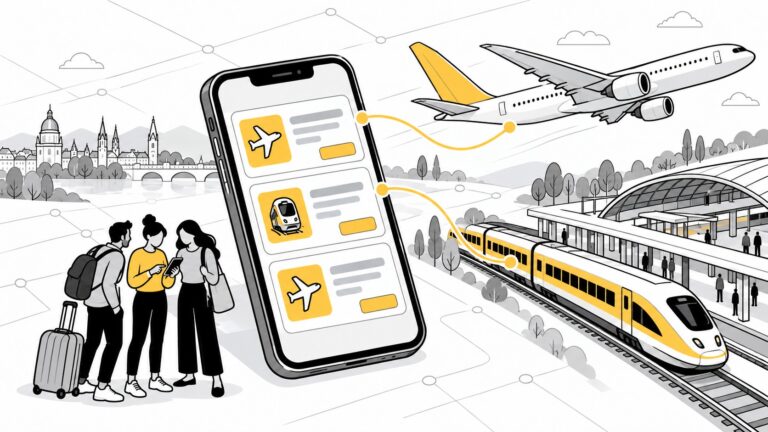
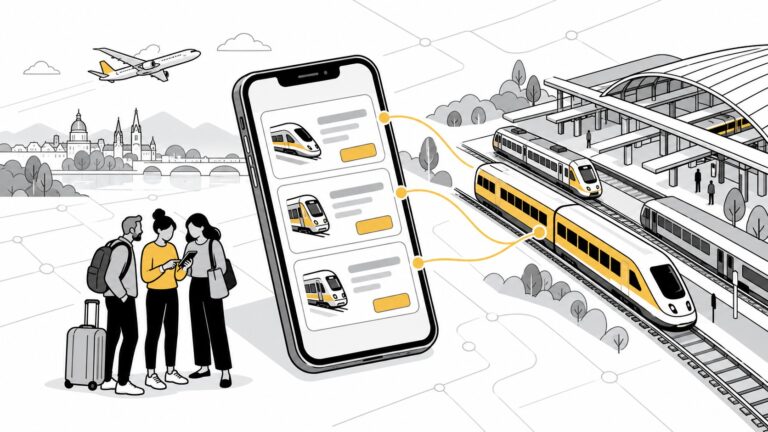
More than a third of European passengers find it difficult to find, compare and combine travel options across transport modes[1]. Why so difficult? Where there is a demand, there is an offer – and several independent platforms have emerged to provide multimodal ticketing. Why do these platforms struggle to reach more users?
The story of dominant players trying to limit competition
Because there is a competition problem. Dominant carriers, across every mode of transport, don’t want their full offers showing up on independent ticketing platforms, and they don’t want travellers comparing them. Why? Because more comparison means more competition. And when you already own most of the pie, comparison tends to end with you handing a few slices to competitors. On your own website, your offers sit safely insulated from any unflattering comparison.
Competition authorities across Europe have seen this clearly. They have acted against Deutsche Bahn in Germany, SJ in Sweden, Ryanair in Italy, Finnair in Sweden and Finland, and SNCF in France. The European Commission itself has taken action against Renfe.
All these cases target the same practices: commercial and technical hurdles imposed by dominant carriers on independent ticketing platforms. It can be unfair remuneration, zero or limited access to their lowest fares, marketing restrictions, technical limitations to data access, surcharges…
The objective of the multimodal ticketing initiative was straightforward: codify the existing case law, applying a horizontal solution to what is plainly a systemic problem.
This is what the Rail Ticketing Regulation does. The list of fair and non-discriminatory conditions it imposes on railway operators (Article 6) draws directly from past antitrust decisions: provision of real-time data and fair remuneration (Deutsche Bahn), access to all fares and reasonable look-to-book ratios (Renfe).
The sharing obligation: A game changer for rail ticketing
Under this framework, independent ticketing platforms will finally be able to present every rail option available — including the best fares — on viable economic terms. A traveller booking Paris to Berlin will see the full picture in one place: the direct Deutsche Bahn service, the SNCF connection via Frankfurt, the cheaper FlixTrain option, all side by side, all bookable in a single transaction. European travellers will be able to combine offers from multiple operators and build cross-border itineraries with ease. Many independent platforms are already building these offers today, even as they struggle to scale against entrenched incumbents. The new framework will help them grow and improve even further.
The effects reach further than convenience. Real price comparison disciplines fares: when travellers can see at a glance that the same Brussels–Amsterdam route is sold at very different prices depending on the operator or the booking class, operators have to compete on value rather than rely on captive customers. New entrants — open-access operators, cross-border start-ups, regional challengers — gain a viable distribution channel from day one, instead of having to build brand awareness from scratch against incumbents with decades of recognition. The Commission rightly sees the potential for a “digital revolution” in rail ticketing.
But what about airlines? Why not actually facilitating multimodal travel?
On 22 December 2025, the Italian Competition Authority hit Ryanair with a €255 million fine — the largest ever imposed on a single airline by any competition authority in Europe. The practices? Blocking, hindering or making economically unviable the distribution of its flights by online and offline travel agents. Sound familiar? They are exactly the practices targeted by the Rail Ticketing Regulation.
And Ryanair is far from alone. Most major airlines have publicly stated their objective of limiting the distribution of their tickets by independent ticketing platforms[2].
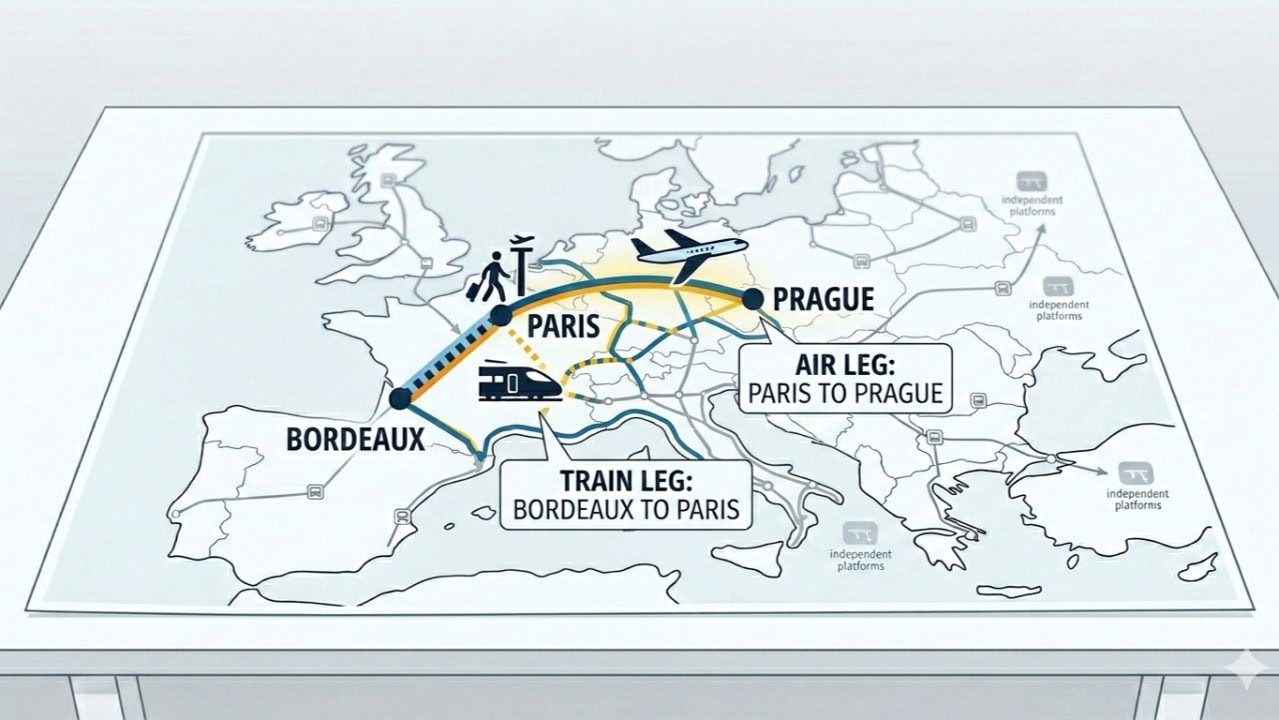
Why do we need to address these airline practices and extend the scope of the Rail Ticketing Regulation to air? Because it is the only way to integrate their flights into multimodal itineraries. Think Bordeaux to Prague, Seville to Krakow, Eindhoven to Naples — routes where rail alone isn’t an option, but flying alone is expensive, cumbersome and less sustainable. Combining air and rail would be the optimal answer[3] for European travellers.
These itineraries can only be assembled by independent ticketing platforms — and only if airlines stop punishing travellers who shop around and book somewhere else than airline.com by saddling them with higher fares or worse conditions, as is the case today.
Turning the Rail Ticketing Regulation into a Multimodal Ticketing Regulation is the only way to make offers from every transport mode genuinely comparable and combinable — something the so-called “Multimodal Booking Regulation” cannot deliver. It is the low-hanging fruit of modal shift: more transparency, better use of existing connections, no additional cost for travellers or taxpayers.
The hosting obligation: two steps forward, one step backward
The Commission’s own proposal describes incumbent rail platforms (SNCF Connect, DB Navigator…) as having “inherited quasi-monopolistic positions” and being “the standard reference for passengers,” with a “customer base [that] remains by far the largest, due to brand recognition [and] persisting purchasing habits”[4]. That is a fair description — and quite some headwind for independent ticketing platforms to compete against.
When regulators face such quasi-monopolies, they have a choice between two policy avenues:
- Open up competition by ensuring the quasi-monopolies no longer harm it. This is the path the EU has taken by liberalising both air travel and rail over successive decades
- Or treat such companies as “essential infrastructure” (e.g. airports) and regulate access to it (e.g. airport slot allocation).
With the hosting obligation, the Commission has effectively chosen the second option. Because incumbent rail platforms are already the reference for passengers, the proposal ensures every railway can list its tickets on them. The result: passengers continue to use those platforms exclusively, but find more operators tickets there.
But wasn’t this proposal meant to deliver a rail digital revolution for passengers? Which platforms would you trust to lead it: the in-house platforms of legacy railways, or independent ticketing platforms like Trainline, eDreams or Omio?
Less or more competition in rail ticketing distribution?
By adopting this “hosting obligation,” the proposal works against its own stated objective: it positions in-house platforms to absorb the competition — indeed, it requires them to, whether they want to or not. With this “essential infrastructure” framing, the Commission sends a clear signal to consumers: there is no need to look beyond the platforms you are already using; everything you need will be there. It elevates incumbent rail platforms to the status of public infrastructure, foreclosing competition between ticketing platforms altogether.
Passengers will likely get the message — shutting new entrants out of rail ticket distribution and leaving today’s independent players to struggle for survival. Who would invest in a market where the regulator has set out to protect the incumbent’s share?
“Gouverner, c’est choisir”! Shall you simply regulate the existing monopolies or rather promote new competition on the rail ticket distribution market? It now falls to legislators to make a choice. As a rail passenger, do you trust independent ticketing platforms more, or the historical distribution arms of legacy railways to deliver the rail digital revolution?
[1] https://europa.eu/eurobarometer/surveys/detail/3178
[3] See Moveyourway.eu for a more detailed demonstration
[4] Recital 6 of the Rail Ticketing Regulation proposal