EU passenger package: potential gamechanger for rail ticketing, regulatory misfire for multimodal travel

Brussels, 13 May 2026 – The European Commission today adopted its long-awaited
passenger package, comprising a Regulation on Rail Ticketing, a Regulation on
Multimodal Booking, and a revision of the Rail Passenger Rights Regulation. After years of
political commitment to make multimodal travel easier , the Commission’s willingness to
legislate now is the right instinct. However, most of the Commission ’s ambition for
multimodal travel has been lost in the policymaking process . While the package mark s
significant progress towards better rail ticketing, it fails to enhance multimodal travel and
risks creating unnecessary regulatory burden on transport ticketing platforms , against
Commission’s ambitions for simplification.
The Rail Ticketing Regulation proposal: potential gamechanger for rail ticket distribution but failing to enhance multimodal travel by including other transport modes
The Rail Ticketing Regulation had the potential to be a genuine step forward for the attractiveness of rail travel in Europe. By imposing fair, reasonable and non-discriminatory (FRAND) obligations on dominant rail operators in their dealings with intermediaries, including on points such as remuneration. This goes to the heart of a market failure that competition authorities across Europe have documented extensively. Once adopted, independent intermediaries will, in many cases for the first time, have a workable basis to negotiate viable distribution agreements with incumbent railways and bring attractive offers to passengers. A follow-on Implementing Act by the Commission to further specify obligations is likely to prove crucial.
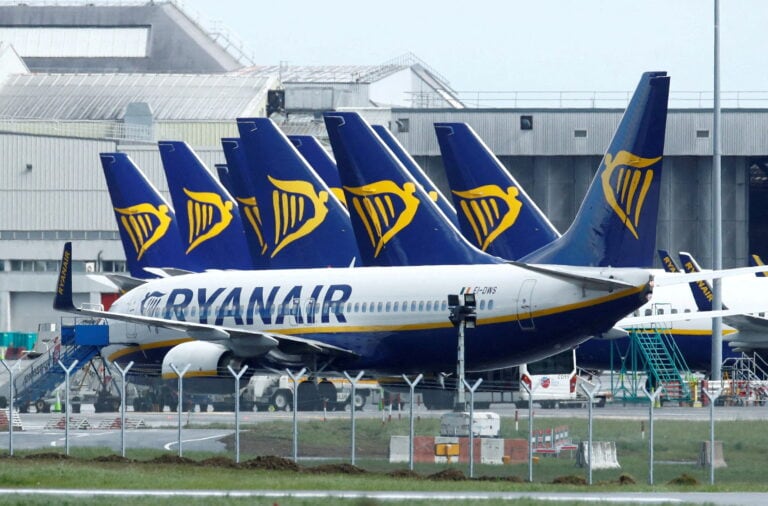
But the Commission has failed to deliver a strong framework in two ways. Firstly, by introducing an obligation for railways to sell tickets of competitors, the proposals risk to chill competition on the rail platform market through a Winner Takes All dynamic, thereby reducing consumer choice and innovation. Second, by limiting the FRAND framework to rail and refusing to extend it to air travel, the proposal does not address the market failure hindering multimodal distribution: airlines pursue the exact same anti-competitive strategies than incumbent railways, to the direct detriment of consumers. Last December, the Italian competition authority imposed on Ryanair the biggest antitrust fine ever imposed on an airline (255.761.692€) for impeding distribution by independent intermediaries2. The Commission’s own ambition to facilitate multimodal travel cannot be achieved without imposing the same obligations on dominant airlines and dominant railways, setting a level playing field between transport modes. The Commission’s proposals fail to enhance passengers’ options to compare and combine all rail and air offers on independent platforms.
“The Rail Ticketing Regulation is both a genuine step forward and a missed opportunity for European travellers. Imposing FRAND obligations for dominant rail operators will unlock real competition and real choice for rail travellers, and we strongly support the Commission’s willingness to act. But the co-legislators must seize the opportunity to build on this solid foundation to instill a true multimodal ambition in the Regulations, applying the same logic to rail and air travel, where the market failures are well-documented and equally damaging.”, said Emmanuel Mounier, Secretary General, eu travel tech.
The Multimodal Booking Regulation proposal present a clear risk of harming transport ticketing platforms competitiveness, without any clear purpose
The proposal includes a maelstrom of new obligations for ticketing platforms, aimed at solving non-existent issues and threatening to harm significantly the very independent distribution channels that the Rail Ticketing Regulation aims at supporting:
- It duplicates and contradicts the existing horizontal framework (the Digital Services Act, the Unfair Commercial Practices Directive, the Platform-to-Business Regulation) which already governs ranking, advertising and transparency for online platforms. Its limited default ranking factors will make it harder for consumers to find the best options, and it further intervenes in an unprecedented way into how platforms generate revenue by effectively banning clearly marked sponsored results in the default ranking of offers.
- It inverts market realities; in a market where more than 80-90% of tickets are sold via direct channels of carriers3, it is online intermediaries, the players with the least market power, which are cast as gatekeepers subject to FRAND-style burdens normally reserved for genuine dominant players.
- It would impose the same “gatekeeper-level” compliance obligations on all B2B players in their dealings with transport carriers, which may be many hundred times their size.
- It runs diametrically opposite to the Commission’s own simplification drive while failing to articulate which concrete market failure it addresses that is not already covered by existing EU law.
“We are concerned that this Regulation may have the exact opposite effect to what the Commission intends to achieve, severely harming the competitiveness of the independent intermediaries the Commission wants to support with this package through the Rail Ticketing Regulation. We call on legislators to be careful not to confuse David for Goliath by imposing gatekeeper obligations on the players with the least market power, while the genuinely dominant carriers continue their harmful disintermediation practices. This Regulation must also stay clear of duplicating existing horizontal rules, and be in tune with the simplification agenda of the EU “, said Emmanuel Mounier, Secretary General, eu travel tech.
Rail Passenger Rights revision: a difficult balance
The revision of the Rail Passenger Rights Regulation tackles a genuinely difficult topic. Strong passenger protection in a complex, multi-operator distribution environment is essential, but it must be reconciled with the operational and economic realities faced by operators and intermediaries who deliver these services. eu travel tech will engage constructively with co-legislators to help strike the right balance.
The road ahead
The Council and the European Parliament, as co-legislators, now face a significant task: improving on the solid basis provided by the Rail Ticketing Regulation, ensuring the Multimodal Booking Regulation does not lead to a counter-productive outcome impeding independent transport distribution rather than supporting it, and finding the careful balance required by the revision of the Rail Passenger Rights Regulation. eu travel tech stands ready to support co-legislators with sector expertise throughout the legislative process.
For more information, please contact:
Emmanuel Mounier, Secretary General (emounier@eutraveltech.eu)
Marc Oomen, Senior Legal & Policy Manager (moomen@eutraveltech.eu)