How the Passenger Package will complicate multimodal travel or the story of a European Commission misfire

What is a camel? It is a horse designed by a technical committee.
Unfortunately, this old French joke describes well the Passenger Package the European Commission presented on May 13. Its stated objective is to facilitate multimodal travel. Yet after years of technical refinement, the package is likely to do the opposite — closing off any realistic prospect of multimodal travel scaling up. Here is how we got there.
2020: the promise of the multimodality final reckoning
The European Commission’s Sustainable and Smart Mobility Strategy committed to an ambitious multimodal ticketing initiative — one that would address a simple but pressing problem: how to plan and book multimodal journeys in one place.
A simple fix for a longstanding issue
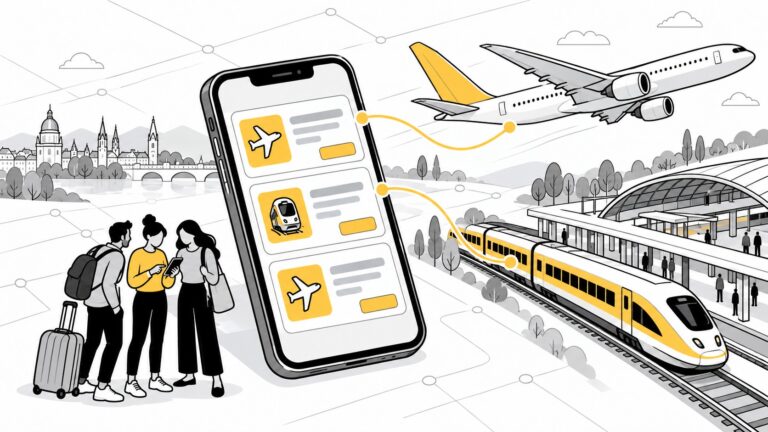
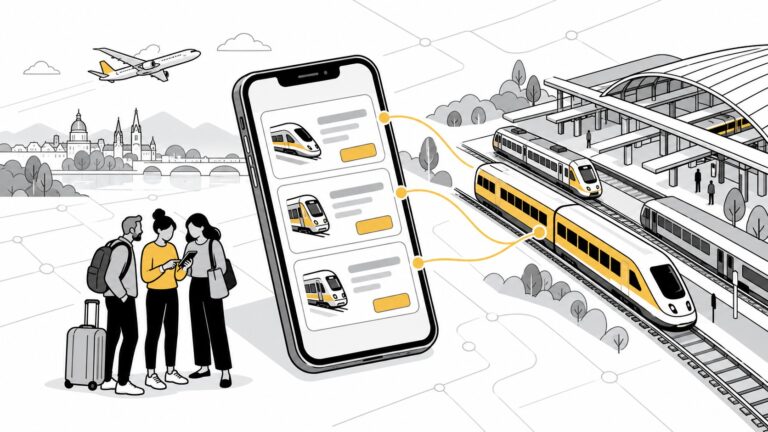
If you want European travellers to choose rail more often — the famous “modal shift” — you need to make it simpler for them to combine rail with other modes, especially air. Today they hardly do, for one straightforward reason: it cannot be done in one place, only across multiple websites.
What should that one place be? The independent online travel platforms travellers already use every day. Ironically, the Commission still agrees[1].
Why can’t they already display every option? Because dominant rail and air carriers are preventing them to do so[2]. The fix is simple: to mandate access — which means regulating every transport mode with a genuinely multimodal approach, not only rail, as the Rail Ticketing Regulation does.
Why only rail?
So why a Rail Ticketing Regulation rather than a Multimodal Ticketing Regulation? A political choice. In 2024, the Commission decided to regulate rail carriers and to leave other modes aside from the outset — without first assessing whether that scope was the right one, despite the evidence pointing the other way.
Multimodal in name only
That left the Commission with a problem: it had still committed to a multimodal ticketing initiative. How do you produce one without regulating every transport mode? By designating the platforms that distribute transport services as “multimodal digital mobility services” and regulating them instead. The result is an initiative that does not enhance multimodal ticketing, does not address the issues European travellers actually face, but does carry “multimodal” in its name.
That left one question: what to put inside this “multimodal initiative”? On that front, the Commission is rarely short of regulatory imagination — for better or worse.
In a forthcoming series of posts, I will examine how the Rail Ticketing Regulation proposal misses the chance to enhance multimodal travel while undermining the competitiveness of independent rail ticketing providers, and how the Multimodal Booking Regulation will duplicate existing rules, hamper independent online travel platforms, degrade the services they offer their users, and add costs for market players and public administrations alike.
Fortunately, these proposals are not the end of the story. The camels can still be turned back into horses — and that is the job of the Council and the European Parliament. MEPs and Member States have the opportunity to genuinely enhance multimodal travel by addressing the real issues market players face, rather than layering on regulation for its own sake. They will have the chance to weigh the evidence and decide accordingly. eu travel tech and its members stand ready to support that work.
[1] Recital 1 of the proposal for the multimodal booking regulation: “For passenger transport, the shift towards a multimodal transport system could be supported by business-to-business (B2B) and business-to-consumer (B2C) multimodal digital mobility service (MDMS) providers, making it easier for end users and business users to find, compare, combine and buy suitable transport products for their journey”.
[2] See eu travel tech position paper for more information on dominant carriers disintermediation practices